



Bringing Lab to Your Pocket: Smartphone-Based Method for Measuring Phenolic Compounds in Vegetable Oils
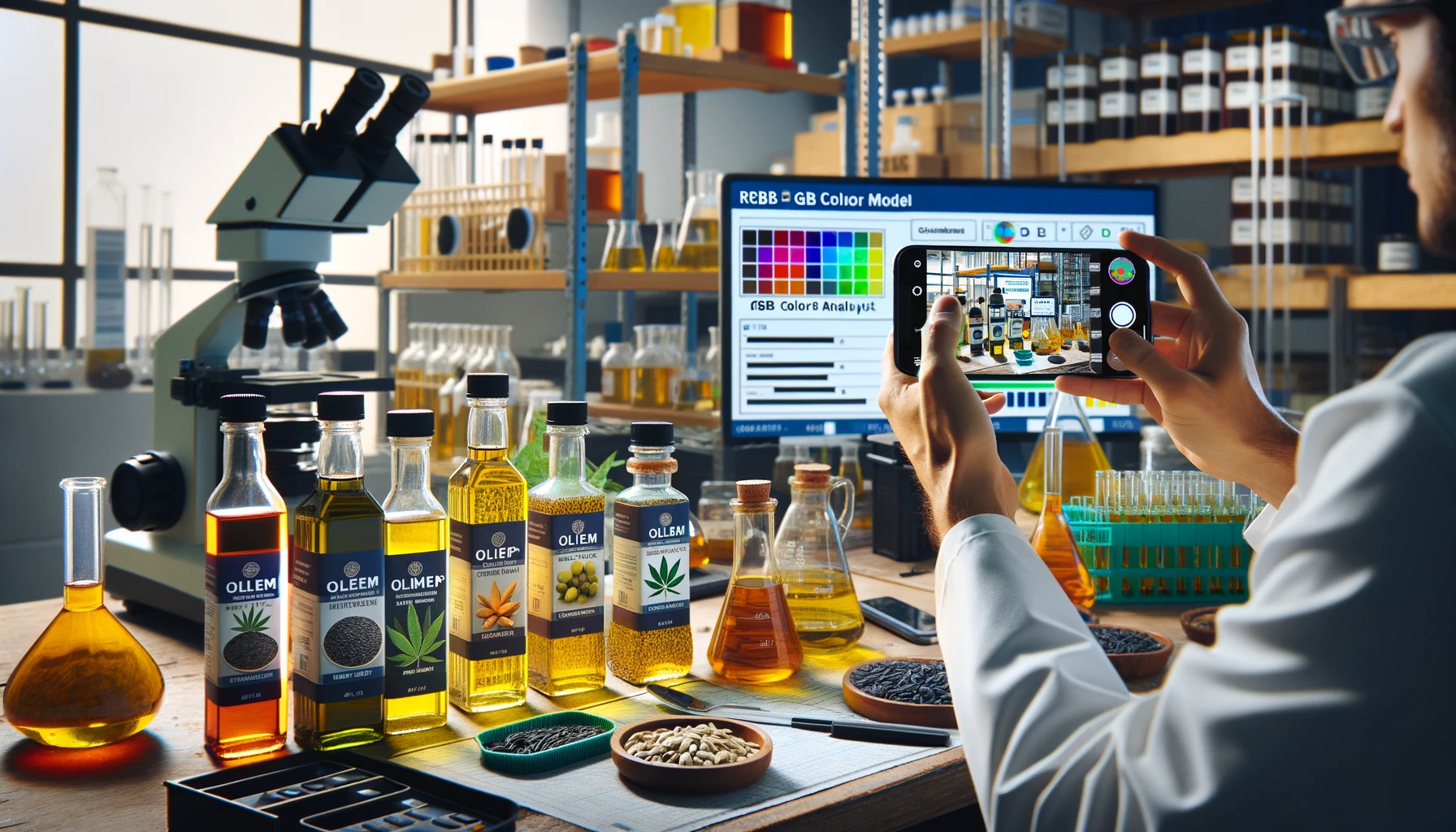
Researchers at the Latvia University of Life Sciences and Technologies, led by Sanita Vucane, have made significant strides in food science by developing a novel method to determine the total phenolic content (TPC) in vegetable oils using smartphone-based image analysis. This innovative approach, as detailed in their study published in the journal "Foods," leverages the RGB color model to assess phenolic compounds, which are essential for the oil's oxidative stability and nutritional quality.
Phenolic Compound's Role and Limitations
Phenolic compounds in vegetable oils play a crucial role as natural antioxidants, preventing oxidation and rancidity, thus extending the oil's shelf life and preserving its nutritional and sensory qualities. Traditional methods of analyzing TPC, such as UV/Vis spectrophotometry, high-performance liquid chromatography (HPLC), and gas chromatography, require sophisticated equipment and a stable laboratory environment. These methods, while effective, are limited by their cost, the need for specialized knowledge, and their stationary nature, which makes them less suitable for on-site or field measurements.
Smartphone-Based Method for Phenolic Content Analysis
The new smartphone-based method developed by Vucane and her team addresses these limitations by offering a portable, cost-effective, and user-friendly alternative. This method involves capturing images of oil samples with a smartphone camera and analyzing the color intensity using the red (R) component of the RGB color model. The study employed a gallic acid calibration solution, demonstrating exceptional determination coefficients for the RGB colors, with red being the most effective for the analyses. The method has shown statistical equivalence to conventional UV/Vis spectrophotometry, making it a reliable substitute for determining TPC in vegetable oils.
Analysis of Vegetable Oils Using Smartphone-Based Method
In their research, the team tested eleven different vegetable oils: sea buckthorn, sunflower, rice bran, macadamia nut, hemp, corn, grapeseed, linseed, rapeseed, olive, and milk thistle oils. They analyzed these oils in their original commercial packaging to ensure accuracy and consistency. Among these oils, hemp and olive oils had the highest total phenolic content (TPC). The traditional spectrophotometric method showed TPC values for hemp and olive oils around 18 and 17.9 mg per 100 grams of oil, respectively. The smartphone-based analysis provided similar results, with hemp oil slightly higher at 18.4 mg, while olive oil remained at 17.9 mg per 100 grams.
Conversely, the lowest concentrations of TPC were observed in rice bran, grapeseed, and macadamia nut oils, with values ranging from 1.2 to 1.3 mg GAE per 100 g of oil. These findings are consistent with existing literature, which attributes the low TPC in these oils to the hydrophilic nature of phenolics, limiting the solubility of bioactives in the oil. The study's results align with those reported by other researchers, confirming the method's reliability and accuracy.
The researchers thoroughly evaluated the smartphone-based method's accuracy and consistency. They analyzed each vegetable oil sample ten times, resulting in a very low relative standard deviation of 0.67 percent. This indicates high precision and minimal variability in the measurements, highlighting the method's reliability. The method's sensitivity was also confirmed, with a limit of detection at 1.254 mg/L and a limit of quantification at 3.801 mg/L. These values show that the smartphone-based method is comparable to traditional spectrophotometric methods in terms of sensitivity and accuracy.
The Future of Vegetable Oil Quality Assessment
The implications of this innovative method are profound. It offers a more accessible way for researchers and industry professionals to analyze phenolic content, potentially revolutionizing quality control and nutritional analysis in the food industry. The method's portability and cost-effectiveness make it suitable for on-site or field measurements, broadening its potential applications. For instance, it can be used in food quality assessment, environmental monitoring, and agricultural research, facilitating rapid and cost-effective analysis of phenolic compounds in various samples.
Furthermore, the method empowers researchers, farmers, and food industry professionals to make timely decisions based on real-time phenolic compound data. This capability is particularly valuable in resource-limited settings, where access to sophisticated laboratory equipment is limited. By utilizing the computational capabilities and optical sensors of smartphones, this approach enables on-the-spot testing and remote monitoring, enhancing the efficiency and accessibility of phenolic compound analysis.
While the new method shows great promise, the researchers acknowledge that traditional methods may still have an advantage in dealing with complex sample matrices or requiring specific compound identification. Therefore, further studies are necessary to optimize and validate the smartphone-based method for a broader range of applications.
Overall, the study by Vucane and her colleagues presents a significant advancement in food science, providing a practical tool for the accurate and efficient determination of phenolic compounds in vegetable oils. This method is expected to be widely adopted in the future, enhancing the ability to ensure the quality and stability of oils in various industries. As technological progress continues to integrate smartphones into chemical analysis, this innovative approach could set a new standard for phenolic content determination, offering a blend of precision, convenience, and accessibility that traditional methods may struggle to match.


 Google News