



ISRO's Breakthrough in Lightning Prediction: A Meteorological Milestone
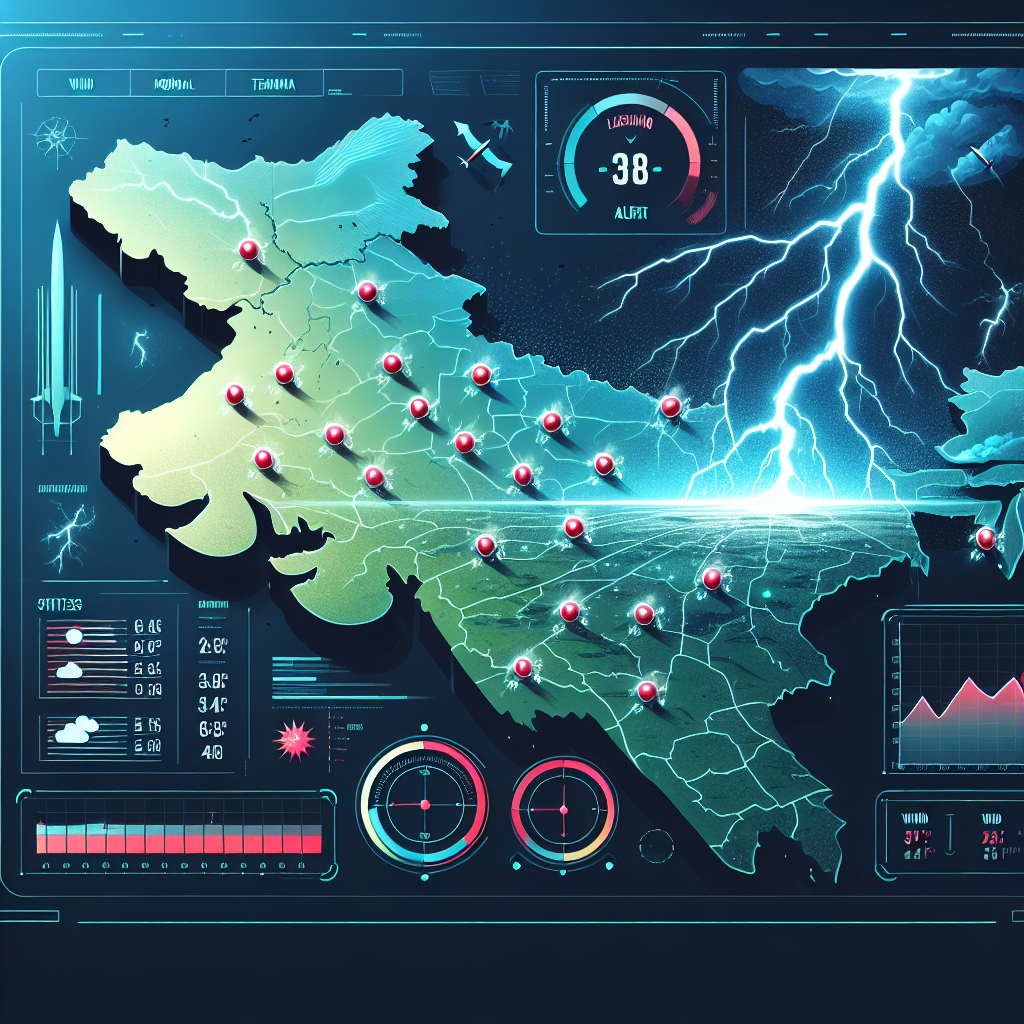
ISRO's National Remote Sensing Centre has made significant advances in real-time lightning forecasting over India, utilizing data from geostationary satellites. Incorporating additional meteorological parameters such as land surface temperature and wind, the developed composite variable predicts lightning events with better accuracy and allows for a lead time of 2.5 hours.
- Country:
- India
The Indian Space Research Organisation (ISRO) announced a significant achievement in lightning forecasting over India, using data from geostationary satellites. This breakthrough, accomplished by ISRO's National Remote Sensing Centre, enhances now-casting techniques to predict lightning more accurately.
ISRO explained that atmospheric lightning results from complex meteorological interactions driven by factors like surface radiation, temperature, and wind. Observations from the INSAT-3D satellite reveal that changes in the Outgoing Longwave Radiation (OLR) can indicate potential lightning occurrences.
Further advancements have been made by integrating Land Surface Temperature (LST) and wind data, developing a composite variable that improves prediction accuracy. This innovation allows ISRO to forecast lightning activity with a lead time of 2.5 hours, marking a significant milestone in weather prediction technologies.
(With inputs from agencies.)


 Google News