



Innovative Radiation Technology: A Game Changer in the Fight Against Plastic Pollution
Recycling remains one of the most viable strategies for managing plastic waste, yet traditional methods face several challenges.
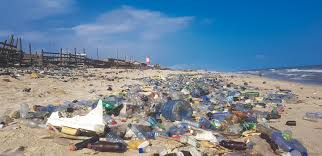
The global commitment to ending plastic pollution is stronger than ever. As the fifth negotiation session for an international legally binding instrument on plastic pollution concluded in Busan, Republic of Korea, in December 2024, Inger Andersen, Executive Director of the UN Environment Programme (UNEP), reaffirmed the world’s determination: “The world’s commitment to ending plastic pollution is clear and undeniable.” With representatives from more than 170 nations preparing for the next session in Geneva, Switzerland, scientists and technologists are making strides in developing innovative solutions to address the plastic crisis. Among these, radiation technologies are emerging as a clean and efficient tool for upcycling plastic waste and creating high-value products.
The Growing Crisis of Plastic Pollution
Plastic pollution has been a long-standing environmental challenge. Before the invention of synthetic plastics, natural polymers such as rubber and cellulose were widely used. The landscape changed in 1907 when Belgian chemist Leo Baekeland invented Bakelite, the first wholly synthetic plastic. Since then, plastic production has skyrocketed. By the mid-20th century, annual global plastic production was about 2 million tonnes. Today, that figure surpasses 400 million tonnes, and if current trends persist, primary plastic production is expected to nearly triple, reaching 1,100 million tonnes by 2050.
The impact of plastic pollution is far-reaching. Of the approximately 7 billion tonnes of plastic waste generated globally, less than 10% has been recycled. Unlike biodegradable materials, plastics do not decompose but fragment into microplastics, which are now found everywhere—from the deepest ocean trenches to the air we breathe.
Challenges in Conventional Recycling Methods
Recycling remains one of the most viable strategies for managing plastic waste, yet traditional methods face several challenges. Two primary techniques dominate the industry:
-
Mechanical Recycling
-
The most widely used method, mechanical recycling involves collecting, sorting, washing, and grinding plastic waste to be melted and reshaped into new materials.
-
While cost-effective, this method struggles with mixed or multi-layered plastics and only applies to thermoplastics.
-
Recycled plastic quality degrades with each cycle, limiting its reuse potential.
-
-
Chemical Recycling
-
This technique breaks plastics down at a molecular level, transforming them into reusable substances such as fuel or raw materials for new plastics.
-
Chemical recycling can process a wider range of mixed and contaminated plastic waste but is highly energy-intensive and requires substantial infrastructure investment.
-
Given these limitations, researchers are now exploring radiation technologies as a promising alternative to conventional recycling methods.
Radiation Technology: A New Frontier in Plastic Recycling
Radiation technology using gamma rays and electron beams offers unique advantages in plastic recycling by altering the molecular structure of plastics without the need for harmful additives. This approach enhances recycling efficiency while reducing environmental impact.
According to Azillah Binti Othman, a Radiation Processing Officer at the International Atomic Energy Agency (IAEA), “The main benefit of irradiation in plastic recycling stems from its ability to alter the chemical structure of plastics at a molecular level. Irradiation can help reduce plastic waste volumes in two ways: by increasing the re-purposing of hard-to-recycle plastics into valuable products and by developing bio-based plastics to reduce reliance on petroleum-based plastics.”
How Irradiation Enhances Plastic Recycling
-
Improving Sorting Efficiency:
-
Irradiation enhances polymer identification, increasing the purity and value of recycled plastic.
-
-
Complementing Chemical Recycling:
-
When used with pyrolysis, radiation technology facilitates the breakdown of plastic waste into reusable fuels and chemicals without adding virgin polymers.
-
-
Enhancing Material Strength:
-
In the Philippines, construction materials made from recycled plastics, such as tiles and bricks, undergo irradiation to improve their durability, abrasion resistance, and mechanical properties.
-
-
Advancing Bio-Based Plastics:
-
Radiation-assisted processes can create biodegradable alternatives to petroleum-based plastics using renewable resources such as biomass.
-
NUTEC Plastics: A Global Initiative for Tackling Plastic Waste
The IAEA’s NUTEC Plastics initiative leverages radiation technology to combat plastic pollution on two fronts:
-
Enhancing Recycling Technologies:
-
Facilitating the establishment of radiation-assisted recycling plants in Asia, Latin America, and Africa.
-
Encouraging innovative upcycling of hard-to-recycle plastics into valuable products.
-
-
Marine Plastic Monitoring:
-
Using nuclear science to identify, trace, and analyze microplastics in marine environments.
-
Supporting global efforts to track oceanic plastic pollution and its impact on ecosystems.
-
Nine countries are currently setting up pilot projects under this initiative, with plans to scale up operations in the coming years.
Upcoming Events: Global Collaboration to Combat Plastic Pollution
The role of irradiation in mitigating plastic pollution will be a key discussion topic at the IAEA’s Third International Conference on Applications of Radiation Science and Technology (ICARST2025). The event, set to take place in Vienna, Austria, from April 7-11, 2025, will bring together experts from diverse fields including physics, chemistry, material sciences, and engineering. The conference will be accessible via live stream to reach a broader audience.
Additionally, two significant international events will take place later in 2025:
-
October 2025, Republic of Korea:
-
Featuring IAEA tools for circular economy assessment and technological maturity evaluation.
-
-
November 2025, Philippines:
-
The first international high-level forum on NUTEC Plastics, highlighting radiation technology's role in tackling plastic pollution.
-
Both events will include discussions on marine plastic monitoring, where nuclear science plays a critical role in understanding and addressing the microplastic crisis.
The Future of Plastic Recycling: A Call to Action
As global plastic production continues to rise, innovative solutions such as radiation technology provide a promising pathway to a sustainable future. With the commitment of international organizations, governments, and scientists, the shift towards more efficient and environmentally friendly plastic recycling methods is becoming a reality.
By integrating irradiation into plastic waste management strategies, we can pave the way for a cleaner planet—one where plastic pollution is no longer an insurmountable challenge, but a problem with viable, scalable solutions.
- READ MORE ON:
- Inger Andersen
- UN Environment Programme
- Plastic Pollution


 Google News