



Navigating Misinformation in Nuclear Crisis: Global Emergency Drill Tests Digital Communication Readiness
To mimic the complex information environment of a real crisis, the IAEA deployed a social media simulator—a secure, controlled digital platform replicating real-world social media behaviour.
In a nuclear or radiological emergency, timely, accurate, and credible information is not just important—it is lifesaving. But in today’s interconnected digital world, false narratives can outpace verified facts, escalating public panic, distorting decision-making, and undermining trust in authorities.
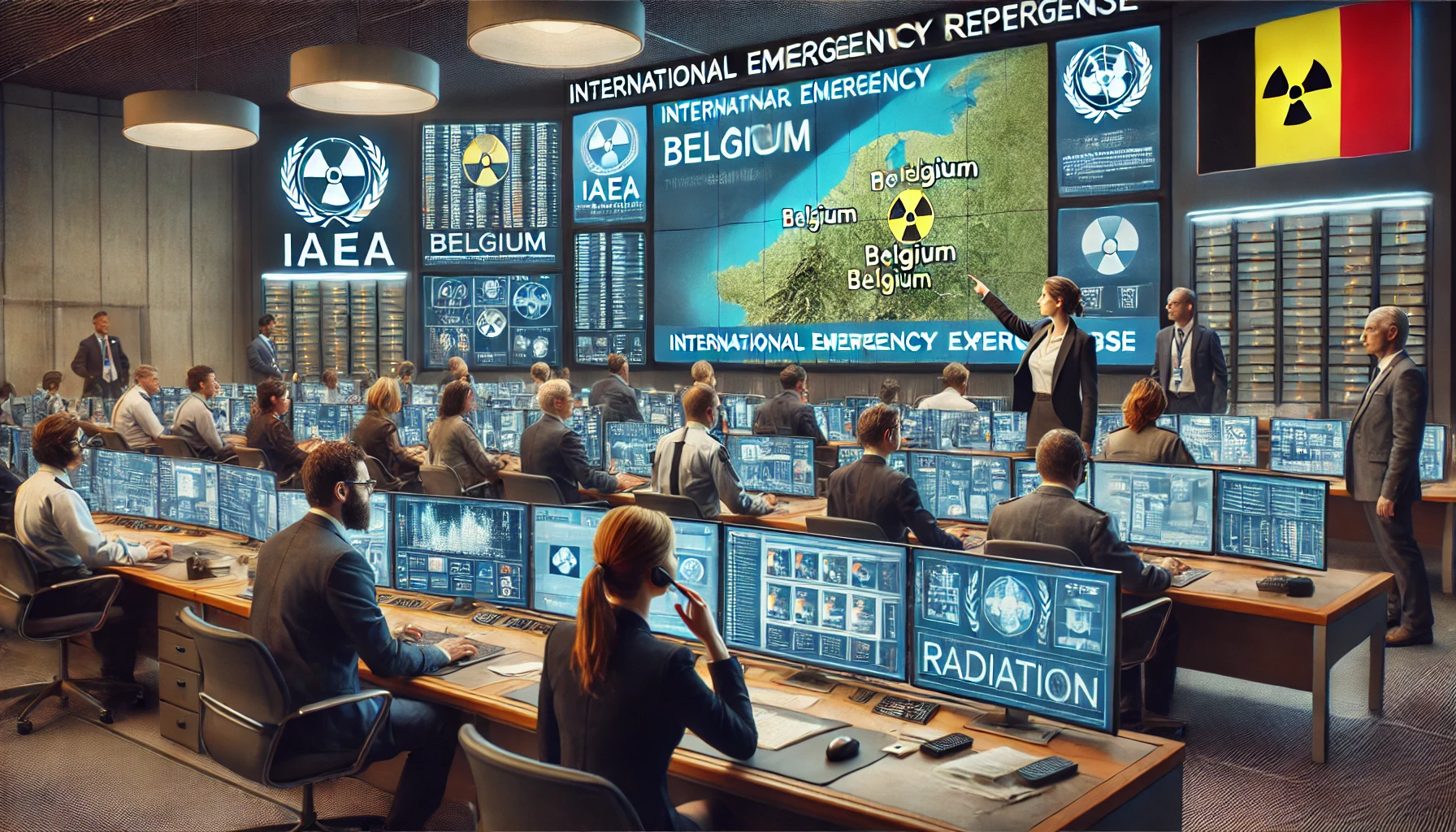
This reality was at the core of ConvEx-2, a large-scale international emergency preparedness exercise held on 19 February 2025, organized by the International Atomic Energy Agency (IAEA) in collaboration with Belgium’s National Crisis Centre (NCCN) and the Federal Agency for Nuclear Control (FANC). The exercise was centered on a hypothetical nuclear power plant (NPP) accident at Tihange NPP in Belgium.
ConvEx exercises are simulation-based emergency drills developed under the framework of two international treaties: the Convention on Early Notification of a Nuclear Accident and the Convention on Assistance in the Case of a Nuclear Accident or Radiological Emergency. They are designed to test and enhance the IAEA’s and its Member States' readiness and coordination during emergencies.
A Multi-National Drill Against a Digital Storm
The 2025 ConvEx-2 brought together emergency responders, regulators, and nuclear operators from 28 countries, simulating a real-time response to a severe incident at Tihange NPP. The focus of this exercise: public communication amid a flood of misinformation.
"This international emergency preparedness exercise was designed to serve as a stress test for emergency communication in an era of digital disruption," said Carlos Torres-Vidal, Director of the IAEA Incident and Emergency Centre (IEC).
Participants were tasked with crafting and disseminating official statements, posting real-time social media updates, responding to public inquiries, and exchanging information with international counterparts via the IAEA’s Unified System for Information Exchange in Incidents and Emergencies (USIE).
In just eight hours, over 90 press statements and more than 300 social media posts were created, shared, and assessed—all under the pressure of a dynamically evolving emergency scenario.
Simulating Chaos: Battling Misinformation in Real-Time
To mimic the complex information environment of a real crisis, the IAEA deployed a social media simulator—a secure, controlled digital platform replicating real-world social media behaviour.
The simulated environment flooded participants with false narratives: manipulated images, baseless rumors about radiation exposure, fake news of cover-ups, and conflicting updates on evacuation zones. These were strategically introduced to test participants’ ability to identify, verify, and respond to misinformation effectively and promptly.
"In a nuclear or radiological emergency, the IAEA provides verified public information," explained Torres-Vidal. "For this exercise, we activated our Incident and Emergency System and worked closely with the IAEA Office of Public Information and Communication to simulate a real-time communication campaign."
The challenge was not only to share facts but also to proactively debunk misleading claims before they could gain traction—a critical capability in today’s digitally driven society.
A United Front for Emergency Readiness
The National Crisis Centre of Belgium, which hosted the exercise, played a pivotal role in coordinating local and international responses.
“Organizing a major exercise such as the one at the Tihange nuclear power plant was a huge challenge,” said Leen Depuydt, Interim Director-General of Belgium’s National Crisis Centre. “But with the help of all our partners, we can consider that this challenge was brilliantly met. I would like to thank the IAEA for its participation and for co-organizing all aspects of public communication in the event of a nuclear accident. It was a rich and fruitful collaboration.”
The insights gained from this international drill are already shaping future strategies.
“As ConvEx-2 clearly demonstrated, effective emergency response is not just about disseminating accurate information — it also requires anticipating and neutralizing misinformation before it takes hold,” noted Florian Baciu, IAEA Emergency Response Coordinator. “Proactive communication can be the difference between public trust and widespread fear.”
Understanding the ConvEx Framework
ConvEx exercises are held at three escalating levels of complexity:
-
ConvEx-1: Tests 24/7 communication links and response times of emergency contact points in Member States.
-
ConvEx-2: Focuses on specific elements of the international emergency framework, including communication procedures, international assistance mechanisms, and assessment tools.
-
ConvEx-3: Full-scale, multi-day simulations of severe nuclear or radiological emergencies, evaluating full international response coordination across all sectors.
ConvEx-2 exercises, such as this one, offer a crucial middle ground, allowing targeted testing of key operational components while simulating real-world pressure and complexity.
Looking Ahead: Strengthening Global Preparedness
The digital age has introduced new threats and opportunities in crisis management. While AI tools and advanced communication technologies can help verify data and streamline responses, they also open doors for deepfakes, bot-driven disinformation, and virality of harmful content.
By stress-testing their preparedness through ConvEx-2, the IAEA and its Member States aim to remain one step ahead.
“With each exercise, we’re better equipped,” said Baciu. “The next nuclear emergency may come without warning—but thanks to efforts like these, our response will be grounded in facts, not fear.”
As misinformation becomes an increasingly formidable challenge in emergency scenarios, exercises like ConvEx-2 help ensure that truth travels just as fast—and with greater impact—than fiction.


 Google News