



Huge comet making its way into inner solar system; might be visible by late March
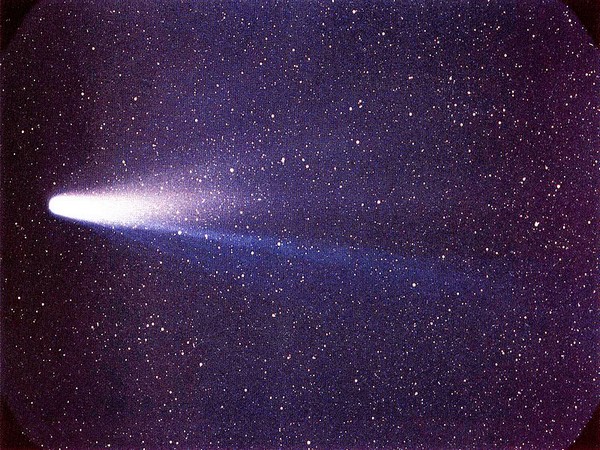
A comet named 12P/Pons-Brooks is heading towards the inner solar system and it might become visible to the unaided eye by late March or in April.
Comet 12P, a mountain of rock, dust, and ice several miles wide, has a 71-year-long orbit that carries it as far from the Sun as the orbit of Neptune and nearly as close as the orbit of Venus. Known for its occasional outbursts, it doesn't cross our planet's path, so there's no chance of a collision.
According to NASA, this comet sometimes brightens by quite a bit, due to bursts of gas and dust being released from beneath its surface. If this happens in the March-April timeframe as the comet nears the Sun, it may get bright enough to observe with the naked eye under dark skies.
Comet 12P will be visible low in the west-northwest part of the sky at the end of evening twilight.
This month, skywatchers can look forward to observing the Jupiter-Moon pairing, Mercury and a subtle lunar eclipse, among other events.
On March 13, the Moon will be joining Jupiter in the west, following sunset. They will be so close that the pair will be visible together through binoculars.
Next up, between March 21-25, skywatchers in the Northern Hemisphere will be able to spot Mercury in the evening sky. Look for it shining brightly, low in the west, about 30-40 minutes after sunset.
Overnight on March 24th and into the 25th, a subtle lunar eclipse, called a penumbral eclipse, will slightly decrease the Moon's brightness. Penumbral eclipses cause only a slight dimming of the Moon's brightness, making them difficult to see. If you glance at the Moon early in the night, and then later, around the peak of the event, you might notice a slight gradient in brightness.
Springing into March with starry nights A chance to catch a comet, a subtle lunar eclipse, a glimpse of Mercury, and Jupiter in the West all month long. Catch this and more: https://t.co/wxf0uB2ZHh pic.twitter.com/a20DUxHmJL
— NASA (@NASA) March 1, 2024
- READ MORE ON:
- Comet 12P
- March skywatching
- NASA
- Jupiter Moon pairing
- lunar eclipse


 Google News