



Shades of Green Revolution: Lightening Up Plants for a Brighter Future
Unveiling the secret garden: Scientists engineer plants with lighter shades, boosting growth and nutritional quality. Discover how reducing chlorophyll levels sparks a green revolution in agriculture!
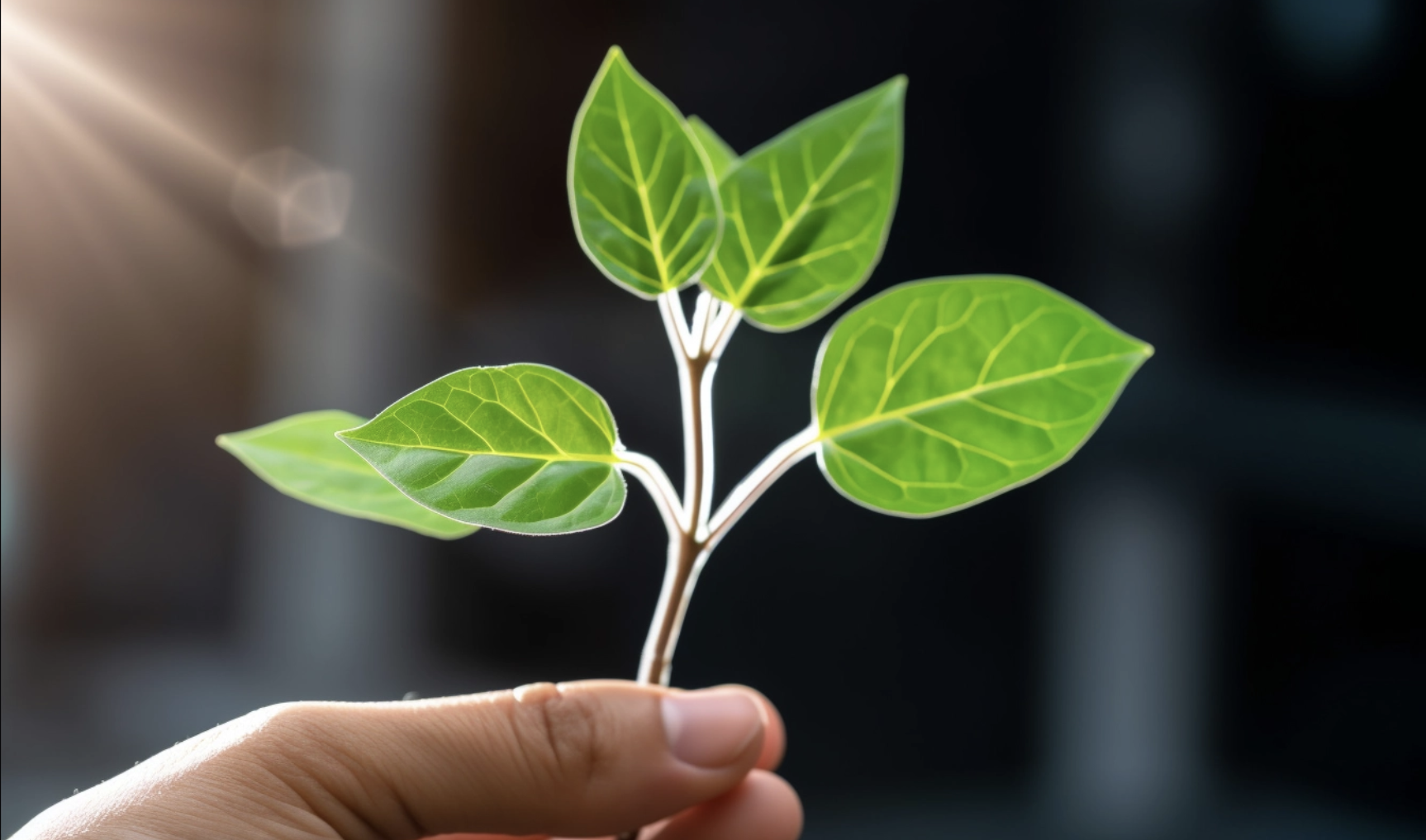
Chlorophyll is a crucial player in the process of photosynthesis, prompting plants to develop high chlorophyll levels in their leaves. However, manufacturing this pigment is costly as plants allocate a substantial amount of nitrogen to produce both chlorophyll and the specific proteins binding to it. This nitrogen investment limits its availability for other essential processes. In a recent study, scientists decided to reduce chlorophyll levels in leaves to investigate if the nitrogen saved could be redirected towards enhancing nutritional quality through other processes.
In recent decades, researchers have been striving to increase crop yield to meet the growing global demand for food. A major challenge they face is improving the photosynthetic efficiency of crops. When light interacts with a leaf, it can be absorbed for photosynthesis, reflected into the atmosphere, or passed through the leaf. Despite a fully green leaf absorbing over 90% of the light, not all of it is utilized for photosynthesis.
Don Ort, a professor of integrative biology, explained that growing crop plants at high densities leads to light-starved lower layers, as leaves at the top cannot utilize all the received light. To address this, the researchers engineered tobacco plants with reduced chlorophyll levels as the crop canopy thickened. They used small RNAs to interfere with key steps in chlorophyll synthesis, controlled by an ethanol-inducible promoter.
Surprisingly, even with a 70% decrease in chlorophyll synthesis, there was no inhibition of growth. The plants, displaying a lighter green shade, grew normally, defying expectations of discoloration indicating illness. The researchers also observed a 17% increase in seed nitrogen concentration in plants with activated ethanol-inducible promoters.
Although they anticipated a boost in yield due to increased light penetration, the researchers did not observe a significant increase. This suggests that the additional nitrogen was not adequately invested to enhance photosynthetic capacity in the lower parts of the canopy, highlighting a potential engineering target for future studies.
The researchers plan to explore light-inducible promoters in their future work, considering them more practical for farmers than ethanol-inducible ones. The study is supported by the Realizing Increased Photosynthetic Efficiency (RIPE) research project, funded by the Bill & Melinda Gates Foundation, Foundation for Food and Agriculture Research, and U.K. Foreign, Commonwealth & Development Office.


 Google News