



Science News Roundup: Jamming with the cicadas in New Jersey: a once in 17 years event; Exclusive: COVID-19 far more widespread in Indonesia than official data show - studies and more
Gerardi, a researcher with the International Institute for Astronautical Sciences, will serve as a payload specialist and experiment with wearable sensor systems and syringe designs for use in space, among other things. Virus does not threaten U.S. blood supply; high vitamin D levels do not protect against COVID-19 The following is a roundup of some of the latest scientific studies on the novel coronavirus and efforts to find treatments and vaccines for COVID-19, the illness caused by the virus.
Following is a summary of current science news briefs.
Exclusive: COVID-19 far more widespread in Indonesia than official data show - studies
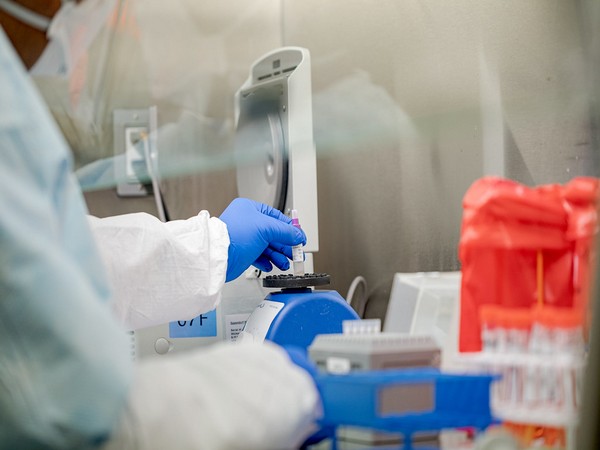
COVID-19 is many times more prevalent in Indonesia than shown by official figures in the world's fourth most populous country, authors of two new studies told Reuters. The country of 270 million has recorded 1.83 million positive cases, but epidemiologists have long believed the true scale of the spread has been obscured by a lack of testing and contact tracing.
Jamming with the cicadas in New Jersey: a once in 17 years event
For some in the U.S., the emergence of billions of red-eyed cicadas this spring after a 17-year slumber has been met with annoyance - particularly over their loud buzzing calls.
But for David Rothenberg, a professor of philosophy and music at the New Jersey Institute of Technology, it has presented a unique opportunity for collaboration.
Electric-van startups race for a 'golden ticket' order
The future of a bevy of commercial electric van startups seeking investor capital through blank-check IPOs rests largely in the hands of a small group of big companies, above all UPS, FedEx, DHL and Amazon. With each carrier having tens of thousands of vehicles in its global fleet, an order from a package delivery giant can launch a startup on the road to manufacturing scale and profitability, and serve as a marketing tool to win orders from other big customers.
Virgin Galactic to fly researcher to space for conducting experiments
British billionaire Sir Richard Branson's spaceship company, Virgin Galactic Holdings, said on Thursday it will fly researcher Kellie Gerardi to space for testing new healthcare technologies. Gerardi, a researcher with the International Institute for Astronautical Sciences, will serve as a payload specialist and experiment with wearable sensor systems and syringe designs for use in space, among other things.
Virus does not threaten U.S. blood supply; high vitamin D levels do not protect against COVID-19
The following is a roundup of some of the latest scientific studies on the novel coronavirus and efforts to find treatments and vaccines for COVID-19, the illness caused by the virus. Coronavirus does not threaten U.S. blood supply
NASA's Venus missions to probe divergent fate of Earth's hothouse sister planet
NASA announced plans on Wednesday to launch a pair of missions to Venus between 2028 and 2030 - its first in decades - to study the atmosphere and geologic features of Earth's so-called sister planet and better understand why the two emerged so differently. The U.S. space agency said it was awarding about $500 million each to develop the two missions, dubbed DAVINCI+ (short for Deep Atmosphere Venus Investigation of Noble Gases, Chemistry and Imaging) and VERITAS (an acronym for Venus Emissivity, Radio Science, InSAR, Topography and Spectroscopy).
'Reef stars' promote new growth in Bali's dying coral ecosystem
Using a snorkel and protective gloves, Pariama Hutasoit dives down into the clear waters off the Indonesian island of Bali to pull away plastic from a "reef star" installed by her conservation group to encourage new coral growth. The Nusa Dua Foundation has installed almost 6,000 of the stars, hexagonal-shaped steel structures around a metre in diameter, in coral reefs across Bali. The stars bridge gaps in the reefs where coral has died, supporting regrowth.
(This story has not been edited by Devdiscourse staff and is auto-generated from a syndicated feed.)


 Google News