



India Accelerates Nuclear Energy Drive with Expansion Plans, Safety, and Private Entry
Speaking in the Lok Sabha, Dr. Singh highlighted several key developments, ongoing projects, policy shifts, and future plans, all aimed at making India a global leader in clean and safe nuclear energy.
- Country:
- India
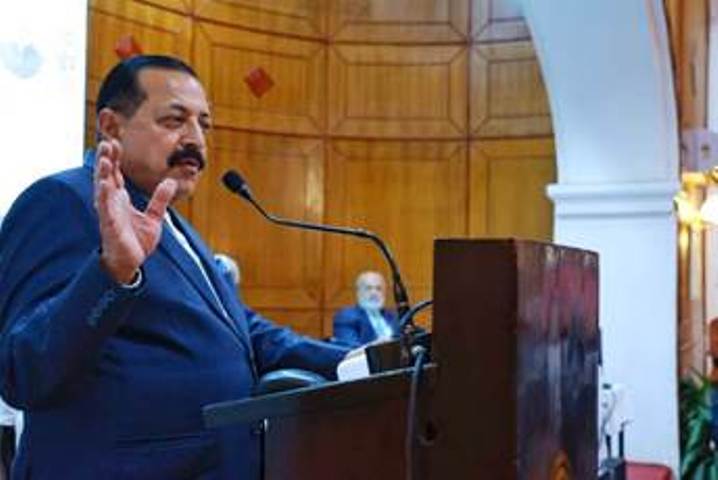
In a landmark parliamentary address, Union Minister of State (Independent Charge) for Science and Technology, Earth Sciences, and Minister of State for the Prime Minister’s Office, Department of Atomic Energy, Department of Space, Personnel, Public Grievances and Pensions, Dr. Jitendra Singh reaffirmed the central government's strategic thrust toward strengthening India's nuclear power sector. Speaking in the Lok Sabha, Dr. Singh highlighted several key developments, ongoing projects, policy shifts, and future plans, all aimed at making India a global leader in clean and safe nuclear energy.
Unprecedented Growth in Nuclear Power Infrastructure
Dr. Singh emphasized that India’s nuclear sector has seen remarkable growth over the past decade, with reactor installations and nuclear energy generation reaching unprecedented levels. From a nuclear generation capacity of 22,480 MW in 2014, the figure has jumped to 35,333 MW in 2024. Simultaneously, installed capacity has grown from 4,780 MW to 8,880 MW — nearly doubling in just ten years. This expansion reflects both the government’s commitment and the strategic importance of nuclear power in India’s energy mix.
Rajasthan Emerges as a Nuclear Energy Hub
Rajasthan, already a key player in India’s atomic energy production, continues to be central to this growth. Dr. Singh pointed out that the state is home to seven of India’s 25 currently operational reactors. He noted a milestone achievement with the revival of a previously non-functional unit, further increasing Rajasthan's contribution to the national nuclear output.
The Minister also shared updates on uranium exploration within the state, stating that pending environmental clearances are being actively pursued. Once secured, Rajasthan could become a major contributor to the country’s uranium reserves — a critical component of nuclear fuel.
New Projects Expand India’s Nuclear Footprint
Breaking from regional concentration, India is now expanding nuclear infrastructure to newer territories. Dr. Singh announced the upcoming establishment of a new reactor in Gorakhnagar, Haryana. This marks a significant shift from the traditional nuclear strongholds of Tamil Nadu, Andhra Pradesh, Maharashtra, and Gujarat, reflecting a pan-India nuclear development vision.
He also noted that Madhya Pradesh is poised to play a larger role in India’s nuclear journey. The Chutka Nuclear Power Project has completed several procedural milestones, including environmental clearance and land acquisition. The state’s Shivpuri project is progressing, with final arrangements for water supply under discussion, and the Khandwa region may also be considered for future expansion.
2017 Cabinet Decision: A Game-Changer
Dr. Singh recalled a historic 2017 decision by the Union Cabinet, which gave simultaneous approval for the construction of ten new nuclear reactors — an unprecedented move in India’s nuclear history. This bulk clearance streamlined project initiation, planning, and procurement, providing a major boost to India’s nuclear capability.
Budget Boosts and the Launch of a Dedicated Nuclear Mission
The Minister spotlighted the significant fiscal push given to the nuclear sector in recent years. The Department of Atomic Energy’s budget has witnessed a dramatic increase — from ₹13,889 crore in 2014 to ₹23,604 crore in the latest Union Budget, marking a 170% surge. This boost has enabled the launch of a dedicated nuclear mission aimed at accelerating technological development, infrastructure building, and self-sufficiency in atomic energy.
Private Sector Participation in the Nuclear Sector
In a significant policy shift, Dr. Singh stated that India is moving toward greater private sector involvement in nuclear energy. “The Prime Minister has decided to open up the nuclear sector to private players, ensuring a larger resource pool and faster development,” he said.
This decision aligns with international best practices, where public-private collaboration has helped scale up operations and enhance innovation in nuclear technology. By opening the sector, India hopes to attract investment, reduce the financial burden on public resources, and drive faster implementation of projects.
Safety First: Rigorous Protocols and Radiation Monitoring
Addressing safety concerns — a perennial topic in nuclear discussions — Dr. Singh was unequivocal in stating that India follows a "safety first, production next" approach. He described a robust safety monitoring mechanism, including:
-
Quarterly monitoring during construction
-
Biannual checks during operational phases
-
Comprehensive five-year safety reviews
Citing a study by Tata Memorial Hospital, Dr. Singh reported that rates of birth defects and cancer around nuclear plants are lower than the national average. He also shared positive radiation data: at Kudankulam, radiation levels fell from 0.081 micro-sieverts in 2014 to just 0.002% today. Similarly, the Kalpakkam plant recorded a reduction from 23.140 to 15.96 micro-sieverts.
Nuclear Waste Management: Safe, Local, and Future-Oriented
Responding to concerns about nuclear waste, Dr. Singh clarified that India adheres to global best practices. Nuclear waste is initially stored on-site for five to seven years, after which it is transferred to specialized 'Away From Reactor' (AFR) facilities for long-term storage and potential reuse.
He also debunked misconceptions suggesting that Kudankulam or Kalpakkam are being used as central waste repositories. “Each facility is self-sufficient in waste management,” he stated, affirming that India’s waste disposal strategy is decentralized and designed to mitigate risk.
Looking Ahead: A Self-Reliant, Green Future
Concluding his address, Dr. Jitendra Singh reiterated the government’s long-term vision for the nuclear sector: “We are committed to expanding nuclear power as a clean energy source, ensuring safety, and embracing private sector participation to achieve self-reliance in nuclear technology.”
The expansion of India’s nuclear infrastructure, rising energy generation, emphasis on safety, and private sector entry signal a transformative phase in the country’s energy policy. With bold decisions, increased investments, and public accountability, India is well on its way to achieving energy security through safe, sustainable, and strategic nuclear power.
- READ MORE ON:
- Dr. Jitendra Singh
- Lok Sabha


 Google News