



Subsidizing Nutrition: How Smarter Farm Policies Can Fix the Global Food System
The World Bank's 2025 report reveals that global agricultural subsidies largely misalign with nutrition goals, often promoting unhealthy diets. It calls for repurposing public support toward infrastructure, research, and nutrition-sensitive agriculture to foster healthier, more sustainable food systems.
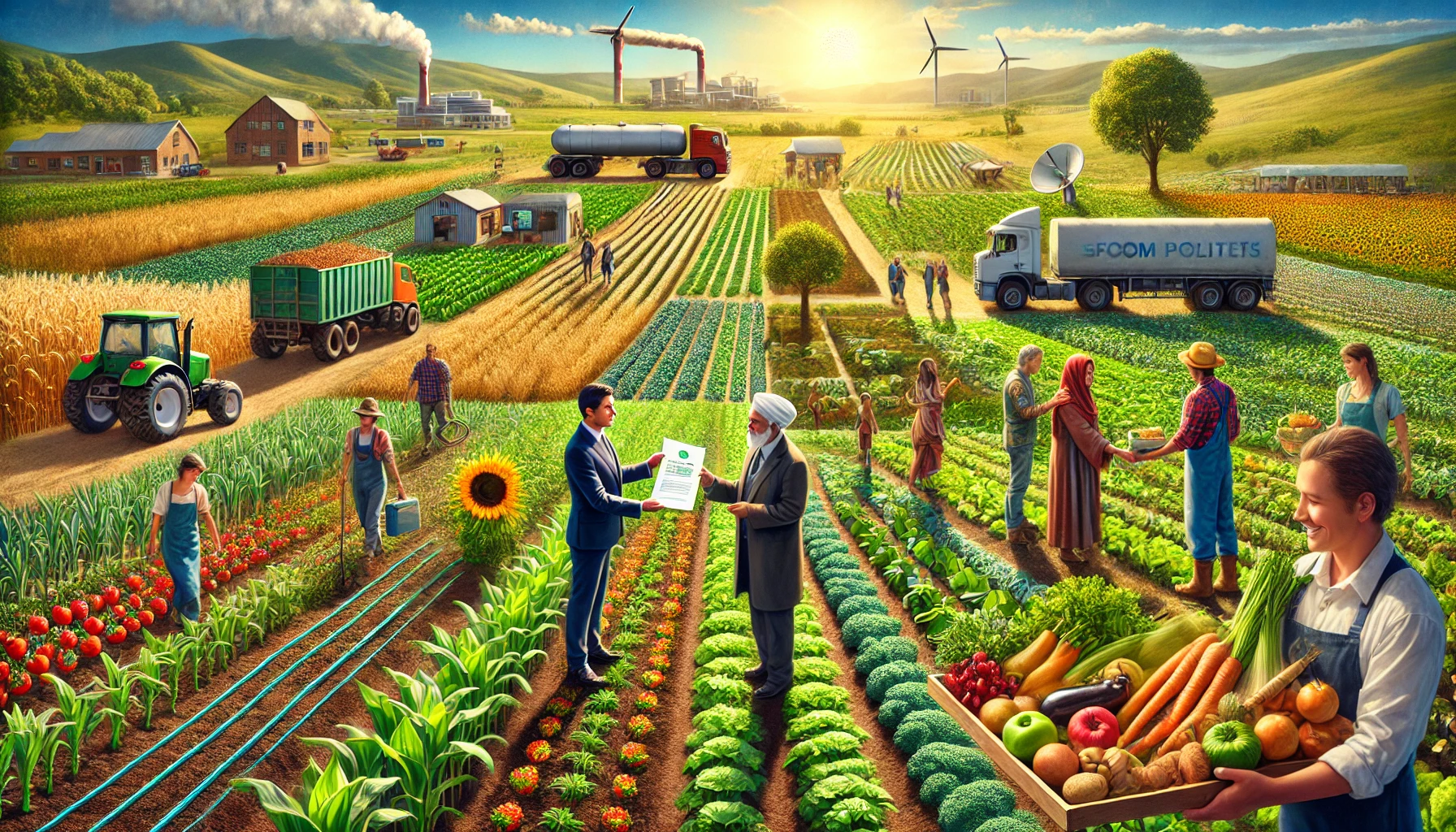
The World Bank’s 2025 report, Reshaping the Agrifood Sector for Healthier Diets: Exploring the Links between Agrifood Public Support and Diet Quality, produced in collaboration with the International Food Policy Research Institute (IFPRI) and the Friedman School of Nutrition Science and Policy at Tufts University, reveals an urgent disconnect between government spending on agriculture and global diet quality. With public support for the agrifood sector reaching $851 billion annually, the report argues that this enormous investment is largely misaligned with the pressing need to improve nutrition, especially in low- and middle-income countries (LMICs). The researchers emphasize that while undernutrition and micronutrient deficiencies persist, obesity and noncommunicable diseases are also surging, creating a triple burden of malnutrition that stems from poor diets shaped by outdated or misplaced policy incentives.
When Diets Shift but Policies Lag Behind
Economic growth and rapid urbanization in LMICs have led to profound shifts in dietary habits. Increased income has not always translated into healthier food choices. On the contrary, consumption of ultra-processed foods, sugary beverages, and animal-based products is on the rise, while intake of nutrient-rich fruits, vegetables, legumes, and whole grains remains alarmingly low. The report finds that most public agricultural subsidies continue to favor staple crops like wheat, rice, and maize, as well as sugar and animal products, many of which are already overconsumed. This kind of targeted support exacerbates the dietary imbalance and misses the opportunity to promote more diverse, nutrient-dense foods.
The researchers warn that unless policies evolve to meet changing dietary demands and health challenges, food systems will continue to contribute to rather than alleviate global nutrition problems. Public support should be redirected toward encouraging the production and consumption of healthier food options and improving access to them, particularly for vulnerable populations.
Public Goods Pay Off More Than Price Supports
One of the report’s most valuable insights lies in its comparison of different types of agricultural support and their respective impacts on diet quality. Market price supports (MPS), which raise the domestic prices of certain crops, are shown to be counterproductive for consumers, making food less affordable and reducing dietary variety. In contrast, general services support (GSS), which includes investments in infrastructure, agricultural research, and extension services, has a more positive correlation with diet diversity.
The data shows that a 10 percent increase in GSS leads to modest but statistically significant increases in the consumption of grains (0.14%), meats (0.22%), and sugars (0.35%). While not revolutionary figures on their own, these gains point to the benefits of systemic investments in public goods over narrow, commodity-based subsidies. The report underscores that GSS strengthens food systems by improving access, reducing costs, and enabling long-term dietary improvements.
Lessons from Bangladesh and Malawi
To explore these dynamics in greater detail, the report presents two country case studies: Bangladesh and Malawi. In Bangladesh, rural road infrastructure emerged as a game-changer. The construction of all-weather roads enhanced household access to diverse food markets, leading to significantly better food consumption and dietary diversity than input subsidies or social protection programs. These findings highlight the critical role that infrastructure can play in shaping food systems that support healthy eating.
In Malawi, the picture is more complex. The analysis revealed that input subsidies primarily for maize did little to improve dietary diversity and, in some cases, encouraged overreliance on monotonous diets. While these subsidies helped households reduce negative coping strategies, such as reducing meal sizes or borrowing food, they did not improve nutrition outcomes. Cash transfers and food aid, meanwhile, provided limited short-term relief but failed to generate lasting improvements. The lack of integration among various programs each targeting different groups and operated in silos was cited as a major limitation to achieving meaningful dietary change.
The Path Forward: Realigning Agriculture with Health
In its concluding recommendations, the report urges governments to repurpose agricultural support in a way that advances public health, climate resilience, and economic development. This means shifting away from price distortions and toward investments in nutrition-sensitive agriculture, research, education, and climate-smart practices. It also calls for the use of integrated planning tools, such as ENHANCE (Environment, Nutrition, and Health Analytics for National Consumer and Emergency Diets), recently piloted in Cambodia, which enables policymakers to weigh the nutritional, environmental, and economic impacts of proposed dietary interventions.
The report doesn’t suggest that all current forms of support are ineffective, but rather that their structure and targeting need an overhaul. Better coordination across programs, alignment with nutrition and sustainability goals, and data-driven policymaking are key to unlocking the potential of food systems to deliver healthier diets for all. In a world facing compounding crises, malnutrition, climate change, and inequality, the time to rethink and repurpose agricultural support has never been more critical.
- FIRST PUBLISHED IN:
- Devdiscourse


 Google News