



A new era in mining: How AI is redefining maintenance and efficiency
Predictive maintenance leverages AI-driven technologies such as deep learning, machine learning algorithms, and real-time sensor data to identify early signs of equipment failure before they occur. By analyzing vast amounts of operational data, AI systems can detect anomalous patterns that indicate wear, overheating, or mechanical stress. Digital twins (virtual replicas of physical assets) play an important role in this transformation, enabling continuous real-time monitoring and process optimization.
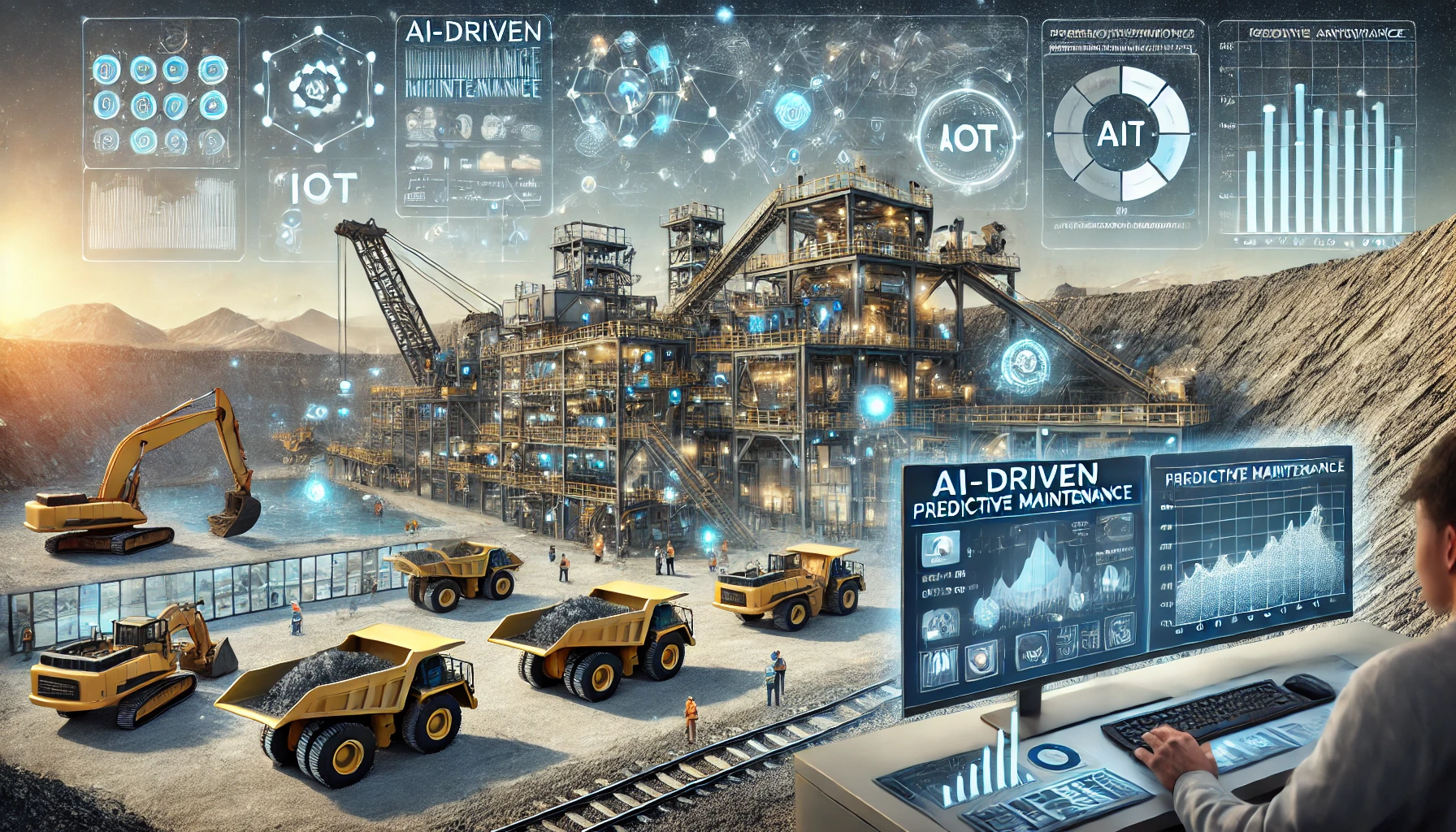
Technology has changed the way maintenance, efficiency, and safety processes are handled in the mining industry. But what happens when critical systems fail unexpectedly? It can lead to costly downtime, safety risks, and massive losses.
With the advent of artificial intelligence (AI)-driven predictive maintenance, mining operations have drastically changed, enabling early fault detection, real-time monitoring, and intelligent asset management. A new study "AI-Driven Predictive Maintenance in Mining: A Systematic Literature Review on Fault Detection, Digital Twins, and Intelligent Asset Management" explores the role of AI in mining maintenance, providing valuable insights into fault detection algorithms, digital twins, and industrial IoT (IIoT)-enhanced monitoring systems.
Harnessing AI for predictive maintenance in mining
Predictive maintenance leverages AI-driven technologies such as deep learning, machine learning algorithms, and real-time sensor data to identify early signs of equipment failure before they occur. By analyzing vast amounts of operational data, AI systems can detect anomalous patterns that indicate wear, overheating, or mechanical stress. Digital twins (virtual replicas of physical assets) play an important role in this transformation, enabling continuous real-time monitoring and process optimization.
This study, which reviews 166 high-impact research papers from Scopus and Web of Science, identifies key methodologies for predictive maintenance. Hybrid AI models, reinforcement learning, and sensor-based data acquisition have emerged as the most effective techniques for optimizing asset management and extending equipment lifecycles. However, challenges remain, including data standardization, model scalability, and interoperability of systems across diverse mining environments.
One significant breakthrough highlighted in the research is the role of deep learning in predictive maintenance. Unlike traditional threshold-based monitoring, AI-driven models can process complex, non-linear data patterns, significantly improving failure predictions. For example, convolutional neural networks (CNNs) have been successfully applied to detect anomalies in conveyor belt vibrations, while long short-term memory (LSTM) networks have improved the forecasting accuracy of equipment wear.
Role of digital twins in smart mining operations
The integration of digital twins with AI-powered maintenance systems is revolutionizing the mining sector. Digital twins provide a virtual environment where asset behavior can be simulated, analyzed, and optimized based on real-time operational data. These models enable predictive analytics, allowing maintenance teams to anticipate potential failures and optimize performance strategies.
In the case of conveyor belts, for instance, digital twins can simulate wear patterns and recommend maintenance actions before mechanical failures occur. Similarly, in milling operations, AI-powered simulations can optimize grinding processes, reducing energy consumption and improving output quality. The research underscores that digital twins not only enhance maintenance but also contribute to overall process optimization, increasing equipment lifespan and reducing downtime.
One of the key advantages of digital twin technology is its ability to integrate data from multiple sources, including IoT sensors, historical performance data, and AI-driven predictive analytics. This holistic approach enhances decision-making, enabling mining companies to move from reactive maintenance models to proactive, data-driven strategies that minimize operational disruptions.
Challenges and future directions in AI-powered maintenance
While AI-driven predictive maintenance presents significant benefits, there are notable challenges that need to be addressed for wider adoption in the mining industry. One major obstacle is the lack of standardized data across mining operations. Variability in sensor types, data collection methods, and software platforms creates inconsistencies that hinder AI model accuracy. To combat this, the industry needs collaborative efforts to establish uniform data protocols that facilitate seamless integration of predictive maintenance solutions.
Another challenge is model scalability and real-time implementation. While AI models perform well in controlled environments, their accuracy can decrease when applied to dynamic and harsh mining conditions. Future research should focus on adaptive learning models that can refine predictions based on continuously incoming data. Additionally, advancements in edge computing can improve real-time predictive capabilities, reducing latency and enhancing system responsiveness.
Furthermore, the research highlights the importance of explainable AI (XAI) in predictive maintenance. AI models in industrial settings often operate as "black boxes," making it difficult for operators to understand the rationale behind failure predictions. Explainable AI frameworks can bridge this gap by providing interpretable insights, allowing engineers to make informed maintenance decisions with confidence.
- READ MORE ON:
- AI in mining maintenance
- AI-powered predictive analytics
- Machine learning in mining operations
- AI for predictive equipment monitoring
- Mining industry digital transformation
- How AI-driven predictive maintenance is transforming the mining industry
- AI-powered predictive maintenance in mining operations
- Why predictive maintenance is the future of the mining industry
- FIRST PUBLISHED IN:
- Devdiscourse


 Google News